|
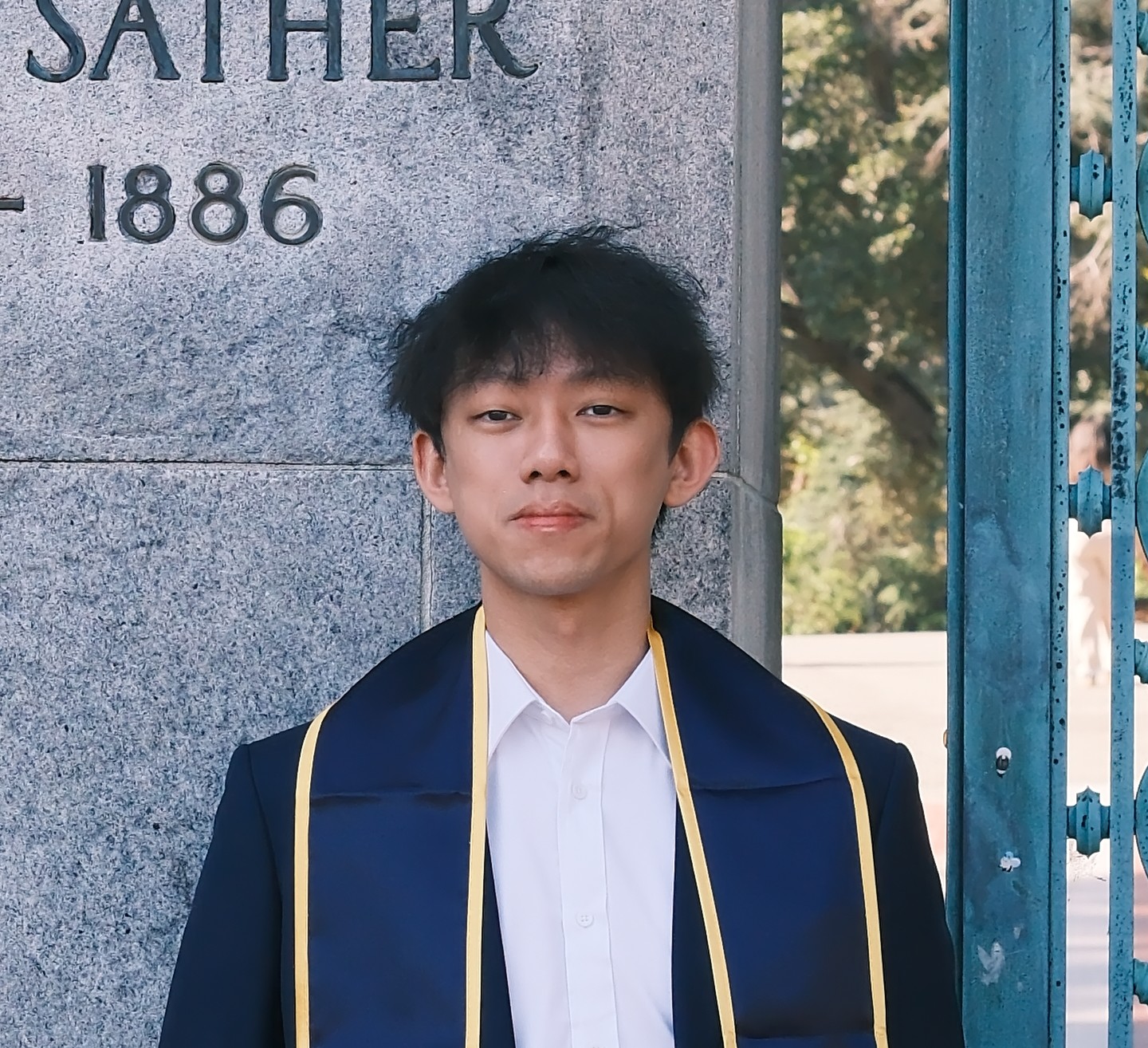
Xinrui (Henry) Li I am a first-year PhD student in the Computer Science Department at Carnegie Mellon University, advised by Jeremy Avigad. I work at the intersection of formal methods, automated reasoning, and machine learning. I am especially interested in making AI systems that formalize and prove mathematics trustworthy and their result more useful and understandable. Before CMU, I received my B.A. in Applied Mathematics and Computer Science from UC Berkeley, where I worked with Kaiyu Yang on LLM-based theorem proving across Lean, Coq, and Isabelle, and with Venkatesan Guruswami on a Lean library formalizing results in coding and information theory. |
|
ResearchI am interested in AI for mathematics and formal verification, and I am especially attracted by combination of neural and symbolic mehtods. I am currently researching on autoformalization and how to evaluate it. As formalizatino library is growing drastically with the development of AI, we will need further judgement on the faithfulness of a formalization beyond its correctness. Representative work is highlighted. |
|
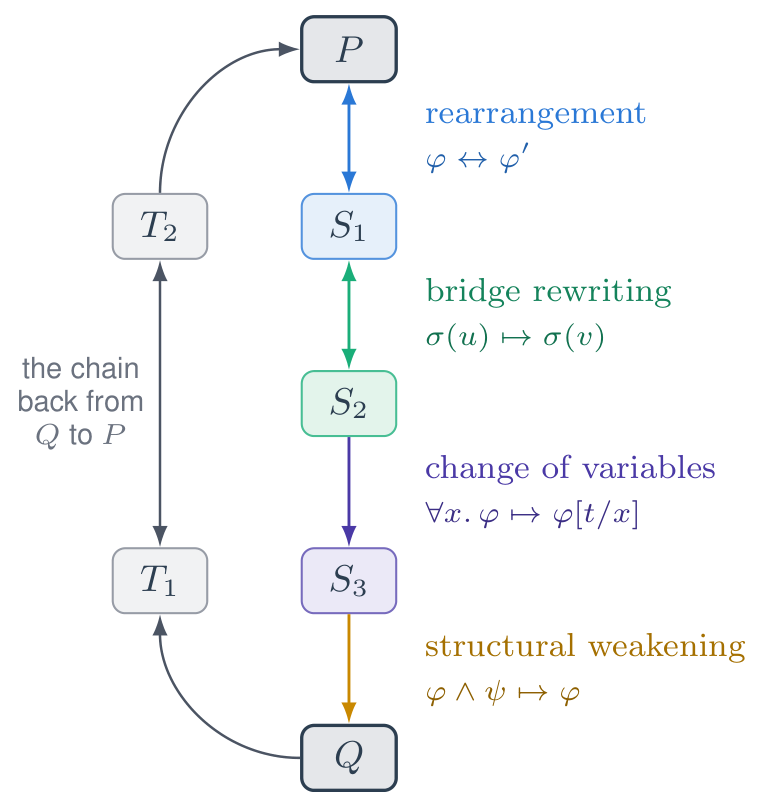
SemantEq: Faithful Bidirectional Equivalence of Formal Statements
Xinrui Li, Pawan Sasanka Ammanamanchi, Siddharth Bhat, Rianna Jamdar, Yongxi Lin, Stella Biderman arXiv preprint, 2026 · under review at ICLR 2027 arXiv / code Logical equivalence is too permissive a test of whether a formal statement faithfully matches its reference, because a strong prover can connect any two provable statements through P ↔ True ↔ Q. SemantEq is a finer relation under which each statement must turn into the other by meaning-preserving steps alone, such as logical rearrangement and rewriting with the library's own equations, and a proof is judged by the term Lean checks rather than by its tactic script. SemantEq-Eval searches for such chains with no model and reaches 100% precision on ProofNetVerif. SemantEq-ProofAudit holds proofs written by a language model to the same standard, accepting none of the non-equivalent pairs while raising recall from 65% to 81%. |
|
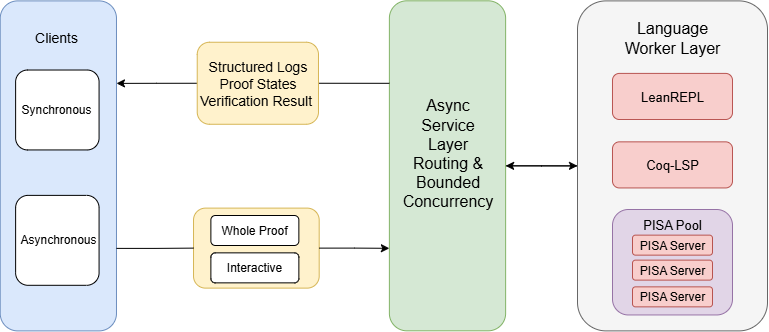
ProofGym: Unifying LLM-Based Theorem Proving Across Formal Systems
Xinrui Li, Wenjie Ma, Hangrui Bi, Zhaoyu Li, Xujie Si, Kaiyu Yang NeurIPS 2025 Workshop on Mathematical Reasoning and AI (MATH-AI), 2025 OpenReview Infrastructure for LLM-based theorem proving that spans Lean, Coq, and Isabelle, so that the same prover, data pipeline, and evaluation can be used across proof assistants instead of being rebuilt for each one. |
Teaching
CS 170: Efficient Algorithms and Intractable Problems, UC Berkeley
CS 189: Introduction to Machine Learning, UC Berkeley |
MiscOutside research I play video games and flight simulators, and I watch anime. |
| Design and source code from Jon Barron's website. |